Learn about MND
What is MND?
Motor neurone disease (MND) is a term for a group of neurological disorders that progressively damage the nerve cells or motor neurones, responsible for voluntary muscle movements like walking, speaking, breathing, and swallowing. With MND, these neurons gradually stop working, and the muscles they control weaken and waste away, leading to a decline in movement, mobility and independence.
MND is both progressive and life-limiting, meaning symptoms will worsen over time. Each person’s experience with MND varies depending on the type and individual progression rate, as well as the specific muscles affected. Although there is no cure yet, MND Tasmania offers treatments and support services to improve quality of life and may help some people live longer with the disease.
The Causes of MND
The precise cause of MND remains unknown in most cases. Current research suggests a combination of genetic and environmental factors. According to MND Australia, approximately 15% of MND cases are familial (inherited), caused by specific genetic mutations, while the remaining 85% are sporadic, with no clear family history. Researchers continue to study genetic, environmental, and lifestyle factors that might contribute to MND risk and onset.
Signs and Symptoms
MND manifests differently for each person, but common early symptoms include muscle weakness,cramps or twitching, difficulty with speech or swallowing, and clumsiness or difficulty with coordination.
As MND progresses, these symptoms spread to other parts of the body, ultimately affecting breathing and mobility. The rate of progression varies significantly; some people experience a slow onset of symptoms, while others progress more quickly. Each type of MND follows a unique course, impacting the body in different ways.

Diagnosis
Diagnosing MND can be challenging due to its similarities with other neurological conditions. A thorough neurological examination, along with tests such as electromyography (EMG), nerve conduction studies, and imaging scans of the brain and spine, can help rule out other conditions and confirm an MND diagnosis. In some familial cases, genetic testing may be conducted to identify known mutations linked to MND.
Early diagnosis allows people and families to access support services promptly, helping them plan for care and symptom management.
Treatment and Care
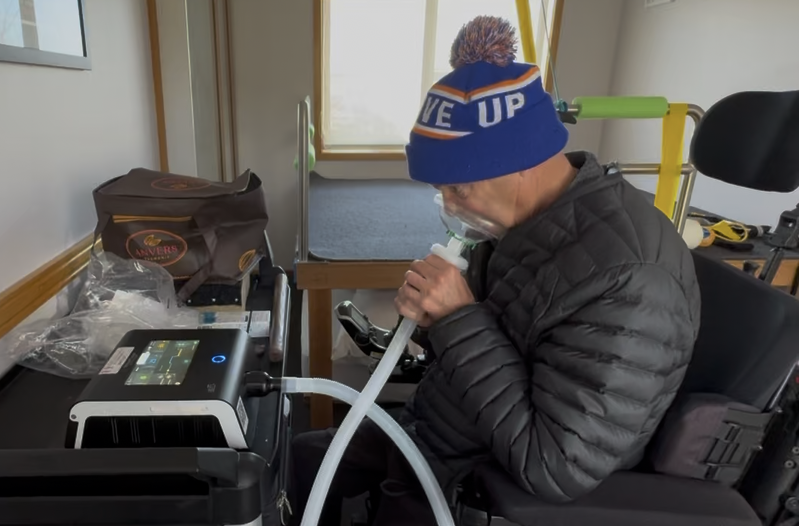
While there is no cure for MND, treatment and support services can help people manage symptoms and improve their quality of life. MND Tasmania provides comprehensive support services to help people manage the impact of MND, including access to MND Advisors, equipment loans, education and carer support programs.

Have you been told that you, or someone you know, has MND?
Being diagnosed and living with MND can be difficult. It is natural to feel worried, stressed, and upset at times, but having MND doesn't mean you can’t live a full life. There are many ways that you can continue to stay independent, live safely, and remain connected with your community.
We have a range of care and support services available that helps people live better for longer with MND.
Office Hours: 8:30am - 4:30pm, Monday to Friday
Types of MND
MND includes several distinct types, which are characterised by the body parts affected and the rate of disease progression. Here are the main types of MND:
ALS is the most common type of MND, making up 90% of cases. It is often referred to as ‘Lou Gehrig's disease,’ named after a New York Yankees baseball player who developed the condition in 1939. It affects both upper and lower motor neurons, leading to progressive muscle weakness and wasting. ALS typically starts in the limbs but can also begin with muscles controlling speech and swallowing.
ALS is life-limiting, with life expectancy approximately two to five years following symptom onset.
PBP also impacts both upper and lower motor neurons and accounts for approximately 25% of all ALS cases. It primarily impacts the muscles involved in speech and swallowing, affecting the motor neurons in the bulbar region of the brainstem. It is often referred to as a subtype of ALS but can also occur independently.
PBP is life-limiting and often progresses more rapidly than other types of MND, with life expectancy between six months and three years from symptom onset.
PMA makes up 9% of all MND cases. It affects only the lower motor neurons, with common symptoms including muscle weakness or wasting, weight loss and muscle twitching. Symptoms may begin in the arms (flail-arm type) or the legs (flail-leg type) before affecting other parts of the body.
PMA is life-limiting but generally progresses more slowly than ALS with life expectancy usually more than five years.
PLS is a rarer and less severe form of MND (1% of all cases) that affects only the upper motor neurons. Symptoms may include stiffness or tightness in muscles, muscle spasms or cramps, changes in balance or slurred speech.
PLS progresses more slowly than ALS and does not typically impact life expectancy.
Access our support services
MND Tasmania provides a range of services across the state to support people with MND, their carers, family, friends and health professionals.
Services are provided through the Support Services team.